Damask, Explained: Where the Pattern on Your Jersey Comes From
From historical silk looms to modern performance textiles: tracing the lineage of continuous botanical and baroque ornamentation.

A Millennium of Continuous Architectural Weave
The term damask historically refers to a reversible figured fabric of silk, wool, linen, or cotton, with a pattern formed by weaving. The technique relies on using two different weave structures — typically a warp-faced satin and a weft-faced sateen — to produce contrasting reflective surfaces.
Throughout architectural and textile history, continuous botanical arabesques and stylized acanthus leaves were used to ornament palaces, tapestries, and royal vestments.
"Damask is not mere decoration; it is structured mathematics applied to thread."
Transposing Monumental Ornament into Modern Performance Wear
For the Ornament Jersey, our studio digitized continuous historic botanical flourishes, normalizing the scale so the repeating medallion spans 24 centimeters across the torso.
This ensures that whether viewed up close or at distance, the repeat sequence maintains balanced balance across the chest, side seams, and raglan sleeves.
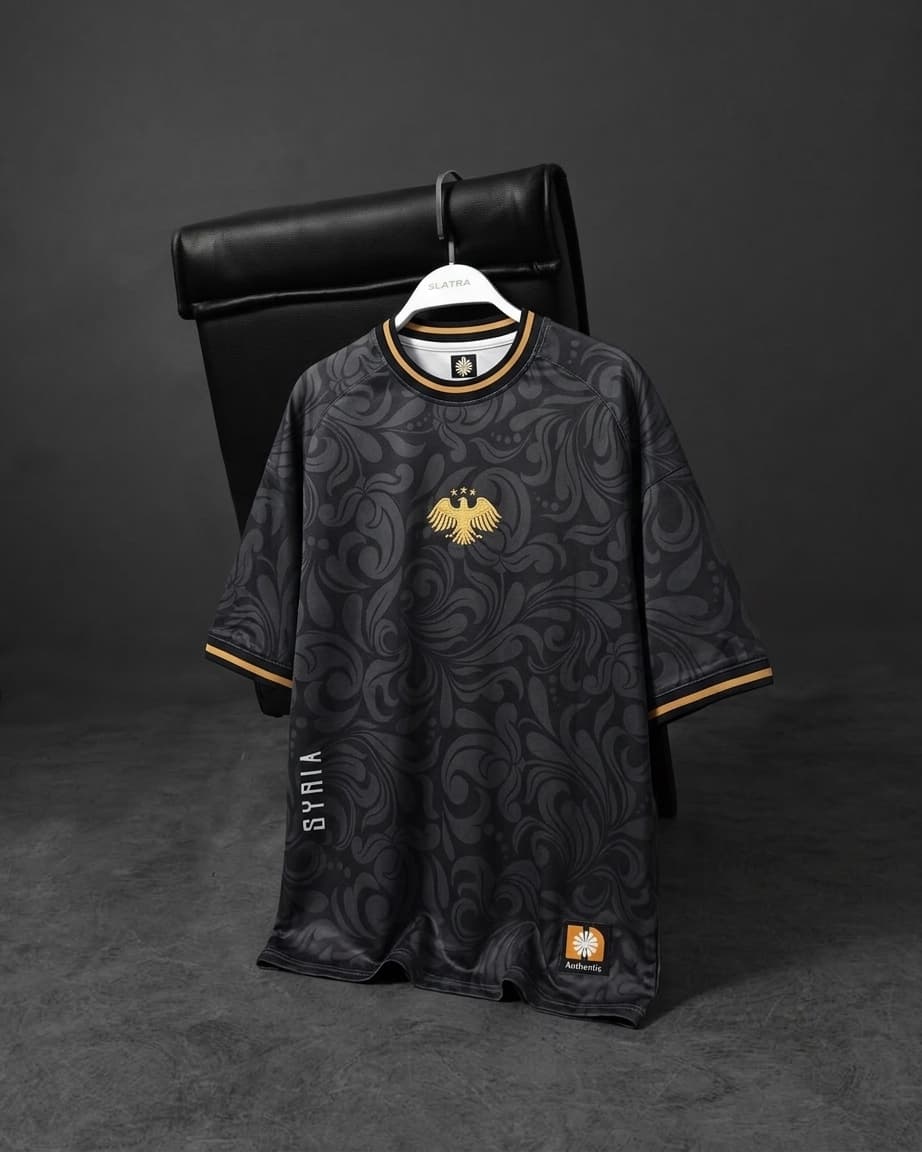
Ornament Jersey — Obsidian
180 GSM matte damask circular knit with 3-color raised gold bullion crest.